Advertisement
Delhi AQI Today: Air Turns 'Very Poor' for the First Time This Season as GRAP Stage 2 Kicks In
News2026-11-02
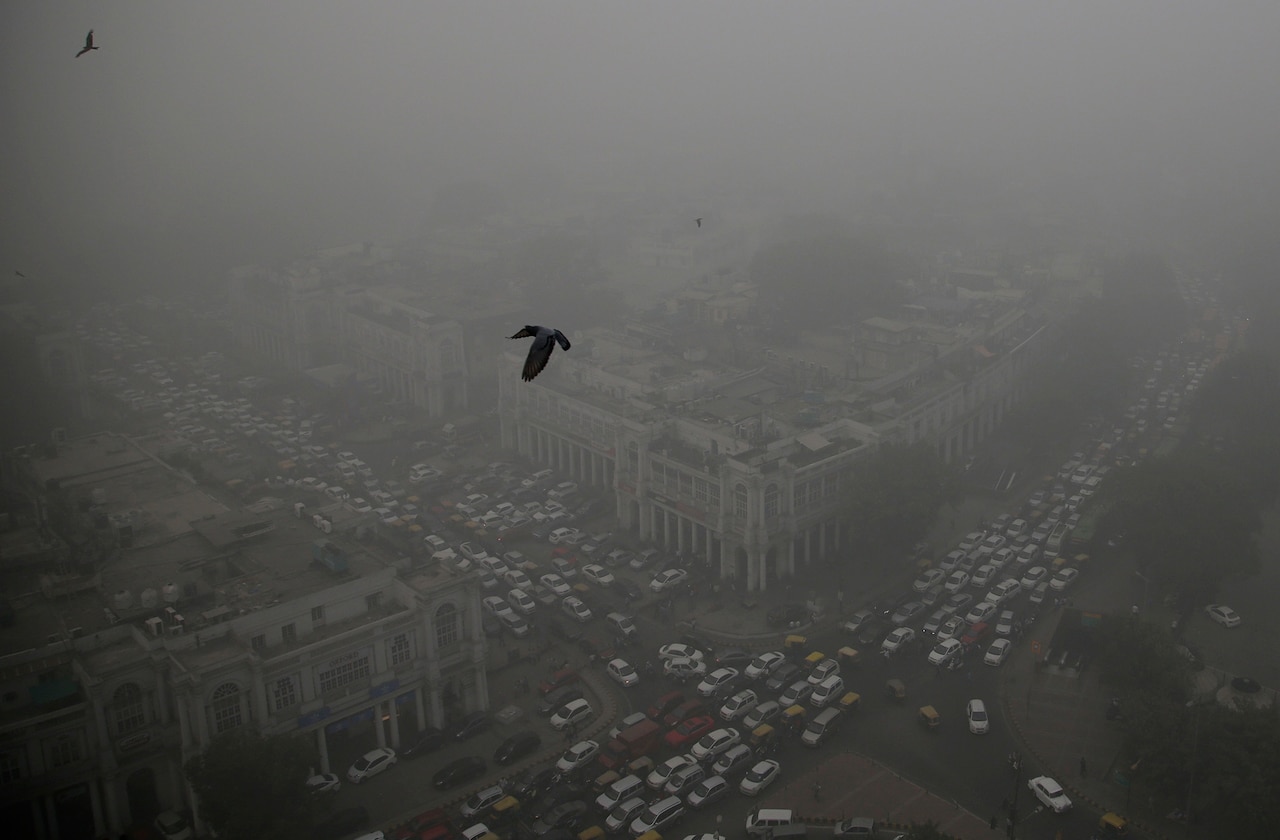
Delhi AQI today has turned 'very poor' for the first time this season. On Monday, November 2, 2026, Delhi's overall Air Quality Index (AQI) was 312 at 9 am, per Central Pollution Control Board (CPCB) data reported by PTI, putting the capital in the 301 to 400 'very poor' band. The Indian Express reported a morning reading of 310, up from 277 a day earlier. In short, the air is unhealthy for prolonged outdoor exposure today, and the stricter GRAP stage now applies.
This is not a one-station spike. Readings above 300 were reported across the city, neighbouring Noida also entered the 'very poor' category at 311, and Delhi Traffic Police stepped up enforcement of vehicle restrictions that came into force on November 1. The slide came a day after Delhi's Winter Action Plan took effect.
Delhi AQI today: area-wise readings on November 2, 2026
CPCB Sameer app and station readings on November 2 show how widespread the deterioration was. These are morning readings, not the full-day average published later, so areas may move by evening. Most of the city sat in the 'poor' or 'very poor' range, with several hotspots near the top of the 'very poor' band.
- Rohini: 396 (very poor), the highest reported
- Alipur: 375 (very poor) and Vivek Vihar: 370 (very poor)
- Chandni Chowk: 358, ITO: 349 and Akshardham: 349 (all very poor)
- Jawaharlal Nehru Stadium: 343 (very poor) and India Gate and Janpath: 335 (very poor)
- Burari: 308 (very poor), Aya Nagar: 276 (poor) and IGI Airport Terminal 3: 263 (poor)
- Noida: 311 (very poor); Ghaziabad at 278 and Gurugram at 230 were 'poor'
For context, the CPCB scale runs from 0 to 50 for 'good' to 401 to 500 for 'severe'. Delhi at 312 sits just inside the 'very poor' band, but Rohini, at 396, was close to 'severe', which is why your local reading can feel quite different from the city average.
What GRAP Stage 2 means for Delhi
The Graded Response Action Plan (GRAP) is Delhi's staged emergency framework, operated by the Commission for Air Quality Management (CAQM). Stage 2 is associated with the 'very poor' band of 301 to 400, and the CAQM's sub-committee invokes it based on readings and forecasts. Reports on November 2 said crossing 300 activated Stage 2, adding stricter curbs on top of Stage 1 restrictions that began on November 1.
The most visible change concerns vehicles. The Indian Express reported that, under the revised GRAP, petrol and diesel vehicles registered outside Delhi that do not meet BS-VI standards are barred from entering the capital until January 31, 2027, while electric and CNG vehicles are exempt. Non-BS-VI commercial goods vehicles and buses face restrictions too. Delhi Traffic Police said they checked 7,279 vehicles on November 1, turned back 714 and impounded 38.
- Stage 1 came into force on November 1, with Stage 2 associated with the 'very poor' 301 to 400 band
- Non-BS-VI petrol and diesel vehicles registered outside Delhi are barred from entry until January 31, 2027
- Electric and CNG vehicles are exempt from the entry restriction
- Delhi Traffic Police checked 7,279 vehicles on November 1, turning back 714 and impounding 38
How to check Delhi AQI today for your area
- Open the CPCB Sameer app or website and find your nearest monitoring station, since readings vary sharply by area.
- Check the AQI number and category, not just the colour, and note whether it is live or a daily average.
- Compare your area with the city average: 396 and 242 mean very different precautions on the same day.
- Recheck in the evening, because morning readings and the 4 pm average can differ, and GRAP follows official readings.
How to protect yourself when Delhi AQI is very poor
Health advisories warn that prolonged exposure at this level can cause respiratory illness, and people with asthma or heart conditions, children and older adults should take extra care. These are general precautions, not medical advice.
- Limit prolonged outdoor exertion, especially in the morning, and move workouts indoors where possible.
- Wear a well-fitting mask outdoors if you must be out long, and keep windows closed during the worst hours.
- Use an air purifier indoors if you have one, and avoid indoor smoke from incense, candles or frying without ventilation.
- Watch for persistent coughing, wheezing or breathlessness, and seek medical advice if they worsen.
Why does Delhi's air get worse in November?
Delhi's air typically deteriorates as winter sets in: calm winds and cooler temperatures trap pollutants close to the ground instead of dispersing them, while emissions from vehicles, construction dust and other sources continue. That is why a clean October can be followed by a sharp slide in early November. Weather played a role on November 2 too: the minimum at Safdarjung was 16.4 degrees Celsius, slightly above normal, and no rainfall was recorded at the city's five stations in the 24 hours to 8.30 am, so no rain washed pollutants away.
What is Delhi AQI today?
Delhi's overall AQI was 312 at 9 am on November 2, 2026, its first 'very poor' day this season, per CPCB data reported by PTI.
What does 'very poor' AQI mean?
On the CPCB scale, 'very poor' is 301 to 400. Prolonged exposure can cause respiratory illness, especially for children, older adults and people with breathing or heart conditions.
Is GRAP Stage 2 in force in Delhi?
Reports said crossing 300 activated GRAP Stage 2, the stage for the 301 to 400 band. The CAQM decides the stage from official readings and forecasts, so check the latest announcement before travelling.
Which Delhi areas had the worst AQI on November 2?
Rohini was highest at 396, followed by Alipur at 375, Vivek Vihar at 370, Chandni Chowk at 358, and ITO and Akshardham at 349 each.
Are vehicles from outside Delhi banned?
Non-BS-VI petrol and diesel vehicles registered outside Delhi are barred from entry until January 31, 2027, under the revised GRAP curbs. Electric and CNG vehicles are exempt.
Try it now
If you have a public TeraBox link ready, paste it into the player and press Watch — no app install, no account needed.
Open the player