Advertisement
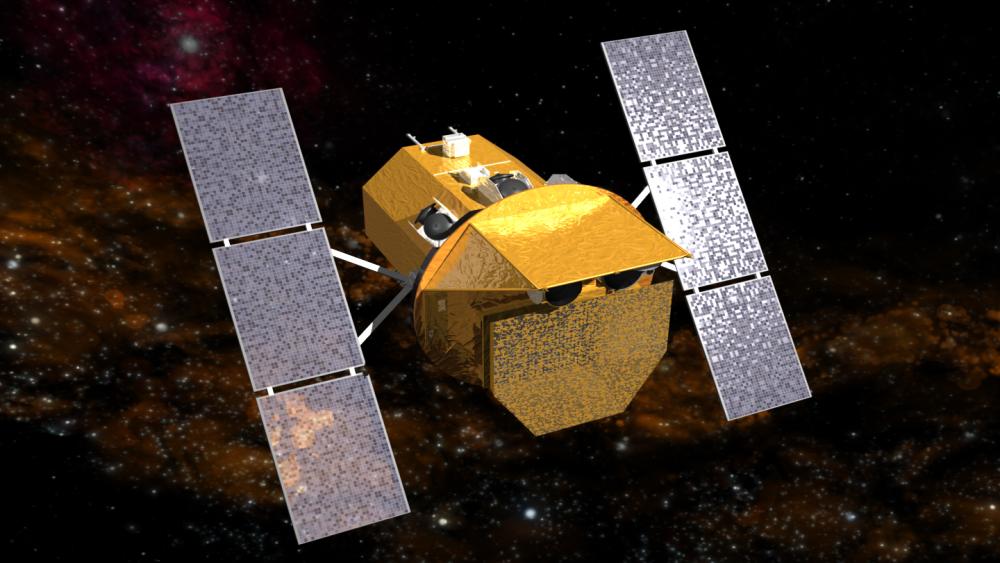
NASA Swift telescope falls to Earth is the story space fans woke up to on November 5, 2026: NASA's 22-year-old Neil Gehrels Swift Observatory plunged back into the atmosphere over Indonesia, burning up and ending one of the most productive missions in modern astronomy. The US Space Force confirmed that the 1,452-kilogram spacecraft re-entered the atmosphere at 7:39 am EST (12:39 GMT) over North Sumatra province, travelling at around 22 times the speed of sound.
No damage or injuries were reported on the ground, and NASA had expected most of the spacecraft to disintegrate in re-entry heat, although some denser fragments may have survived. The agency had assessed the risk of harm to anyone on Earth at about one in 2,100.
NASA Swift Telescope Falls to Earth: What Happened on Re-Entry
Swift's return was not a surprise to the people tracking it. Its orbit had been sinking for months because of increased drag from the upper atmosphere, made worse by intense solar activity over the past couple of years as the Sun reached the peak of its 11-year cycle in 2024. As the atmosphere expanded, drag on Swift grew, its orbit dropped to just 275 kilometres above Earth, and the observatory could no longer compensate. It officially stopped gathering scientific data, and a team at Penn State, NASA's partner on the project, sent the final kill-switch command on October 20, 2026.
From there, gravity did the rest. Swift streaked into the upper atmosphere over Indonesia, near 3.4 degrees north and 98.6 degrees east, according to NASA's update. Those coordinates mark where it entered the atmosphere, not a confirmed debris impact point, and NASA did not report debris found in North Sumatra. It was not immediately clear how close the point was to Medan, home to about 2.5 million people, but no damage or injuries were reported.
The Failed Rescue Mission That Sealed Swift's Fate
Swift's end came less than three months after a long-shot rescue mission failed. In July 2026, NASA hired Arizona-based start-up Katalyst Space to try to save the telescope. Its LINK spacecraft, a three-armed robotic craft, was designed to attach itself to Swift and push it into a higher orbit, extending its life. Instead, LINK began spinning uncontrollably after reaching space, and mission managers had to abandon the attempt. Reports say the rescue craft itself came crashing down in September 2026.
That failure mattered because Swift had no easy replacement waiting. NASA's reporting notes it does not have an established observational replacement waiting in the wings, and the rescue was a first-of-its-kind attempt to catch a satellite never built to be serviced.
What Swift Discovered in 22 Years
- Launched on November 20, 2004, from Cape Canaveral on a Delta II rocket, on what was expected to be a two-year study of gamma-ray bursts and exploding stars.
- Gamma-ray bursts: Swift studied the most powerful explosions known in the universe, rapidly pinpointing bursts so other telescopes could follow up.
- Supernovae, black holes, X-ray flares, asteroids and comets: the mission widened far beyond its original brief, contributing to around 7,000 scientific research papers.
- A 22-year working life: Swift operated for more than ten times its planned two-year mission, far beyond what its designers expected.
- A multi-wavelength eye: Swift combined gamma-ray, X-ray and ultraviolet and optical observations, letting astronomers catch cosmic explosions in several kinds of light at once.
That record is why astronomers are mourning Swift even though its fall was expected: a telescope built for two years gave science more than two decades of data, right up until its orbit could no longer be held.
Is Falling Space Debris Dangerous?
Should people worry about satellites falling on them? The short answer is that the risk is very low. An engineer quoted by Reuters noted that satellites of this size re-enter regularly, and in nearly 70 years of spaceflight no one has ever been killed by falling debris. Most of a spacecraft burns up high in the atmosphere.
NASA's one-in-2,100 estimate was its pre-re-entry assessment of harm to anyone on Earth, and the outcome so far matches it, with no damage or injuries reported. Re-entries are not risk-free, and agencies track large objects closely, but Swift's finale is the normal end for a low-orbit satellite that can no longer stay up.
NASA Swift Telescope Falls to Earth: Frequently Asked Questions
When did the NASA Swift telescope fall to Earth?
The Neil Gehrels Swift Observatory re-entered Earth's atmosphere at 7:39 am EST (12:39 GMT) over North Sumatra, Indonesia, as confirmed by the US Space Force and reported by NASA.
Why did Swift fall from orbit?
Increased solar activity expanded the upper atmosphere, raising drag on Swift until its orbit sank to about 275 kilometres and it could no longer compensate. A July 2026 rescue mission by Katalyst Space failed, leaving no way to boost it higher.
Was anyone hurt by Swift debris?
No damage or injuries were reported on the ground. NASA expected most of the 1,452-kilogram spacecraft to burn up, with only some denser fragments possibly surviving, and had assessed the risk of harm at about one in 2,100.
What did Swift study?
Swift launched in 2004 to study gamma-ray bursts, the universe's most powerful explosions, and went on to observe supernovae, black holes, X-ray flares, asteroids and comets, contributing to around 7,000 research papers.
Is there a replacement for Swift?
NASA has noted that Swift does not have an established observational replacement waiting in the wings, which is part of why the failed rescue mission mattered so much.
NASA Swift telescope falls to Earth marks the end of a mission that outlived its plan by twenty years and changed how astronomers chase cosmic explosions. Swift is gone, burned up over Indonesia after a failed rescue and a slow orbital decline, but its two decades of observations will keep feeding research for years to come.
Try it now
If you have a public TeraBox link ready, paste it into the player and press Watch — no app install, no account needed.
Open the player